Digital sovereignty is not primarily a matter of principle. It is a matter of architecture. When the public sector seeks to reduce long-term dependency, the real question is how information is structured, shared and kept understandable over time.
The discussion around digital sovereignty often remains at a high level. It centres on dependency, resilience and control. But sooner or later, a more concrete question emerges:
How do we build this in practice?
From Values to Design
If the conversation about open source starts with values such as transparency and choice, its real impact is determined by how systems are actually designed.
Open source alone does not create sovereignty. It can create better conditions. But it is the architecture that determines whether organizations retain room to maneuver over time.
In public digital infrastructure, the issue is therefore less about replacing everything and more about avoiding structures that make future change unnecessarily difficult.
Three principles are central:
- Open standards
- Interoperability
- Structured and reusable metadata
These are what determine whether information can move, connect and remain understandable even as systems evolve.
Control Lies in How Information Is Described
Digital dependency rarely arises solely from the choice of platform. It emerges when information is described in ways that are difficult to reuse or integrate beyond a specific system.
When metadata is clearly defined and shared across systems, information becomes more portable. It can survive technological shifts. It can be reused in new contexts.
When the structure is unclear or proprietary, flexibility decreases. Change becomes costly. Room for manoeuvre shrinks. This is where digital sovereignty becomes tangible.
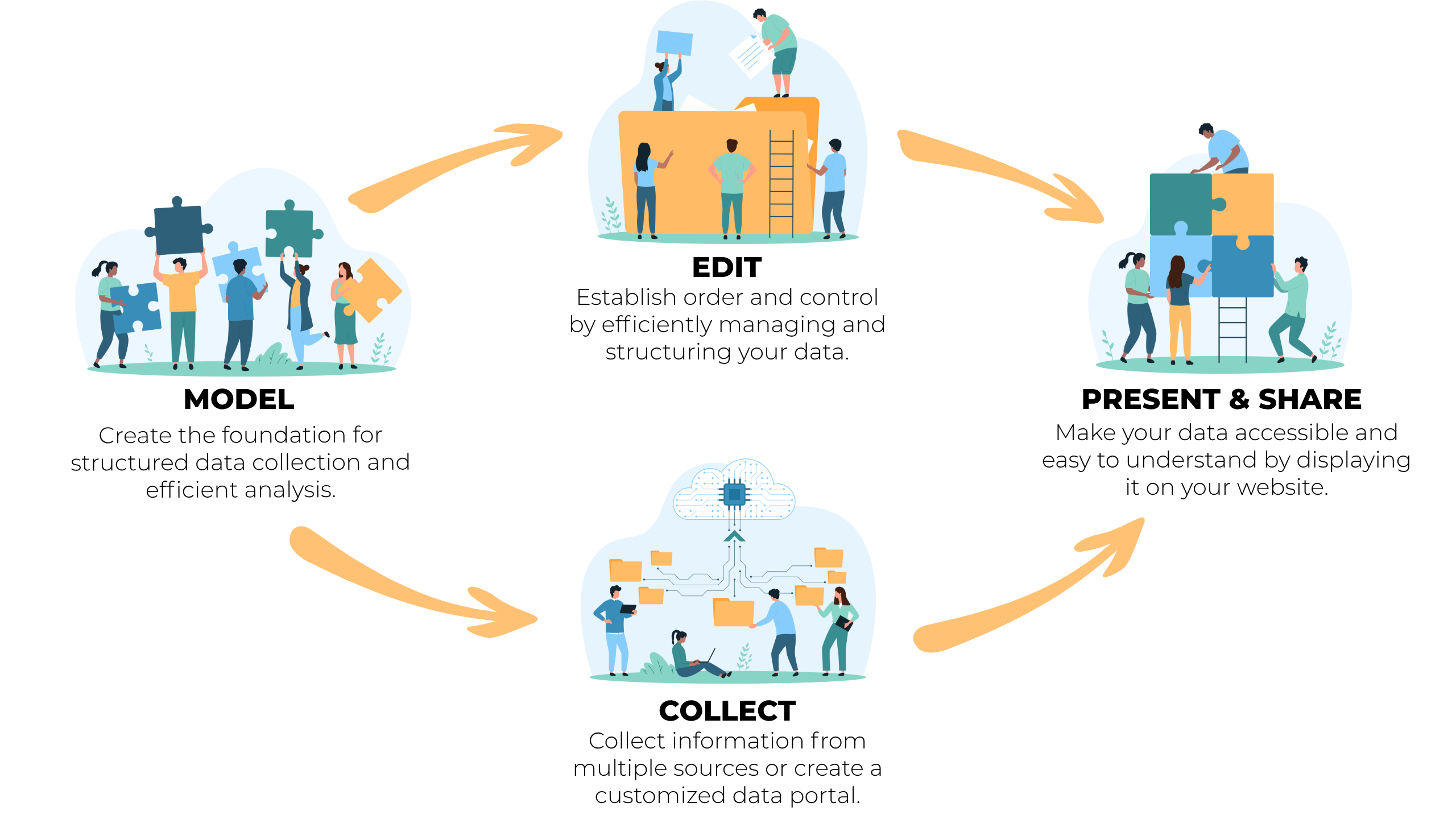
There are different ways to address this structural level. At MetaSolutions, we have chosen to develop EntryScape as a tool for managing information structures, concept models and linked data using open standards.
EntryScape does not replace an entire system landscape. It functions as a structural layer — a way to keep information understandable and interconnected regardless of the applications built on top.
Try EntryScape Free? Click here!
It is not open source in itself that solves the problem. It is the combination of transparent structure, shared concepts and the ability to maintain interoperability over time.
Designing for Change
Public digital infrastructure is expected to last for decades. Technologies evolve. Vendors change. Requirements shift. Digital sovereignty is therefore not about choosing the right supplier once. It is about building structures that make future change possible.
- Open source can contribute to transparency.
- Open standards can contribute to portability.
- Structured metadata creates continuity.
The decisive question is whether the infrastructure is designed to remain understandable and adaptable over time.